I offer patients with severe hip arthritis a safe, reliable, and time-tested hip replacement operation.
Hip replacement (THA - total hip arthroplasty) replaces the damaged ball and socket of the hip joint with prosthetic components to relieve pain and restore function. It is one of the most successful operations in all of medicine, with high satisfaction rates and durable long-term results.
Is Hip Replacement Right for Me?
Hip replacement is most appropriate for patients with advanced arthritis who have significant pain and loss of function that does not respond to non-surgical care. Common symptoms include deep groin or buttock pain, stiffness that limits walking or getting in and out of a chair, and pain that disrupts sleep.
Nonsurgical treatment options for hip arthritis include anti-inflammatory medications (such as acetaminophen, ibuprofen, or naproxen), activity modification, physical therapy, and corticosteroid injections.
The Hip Prosthesis
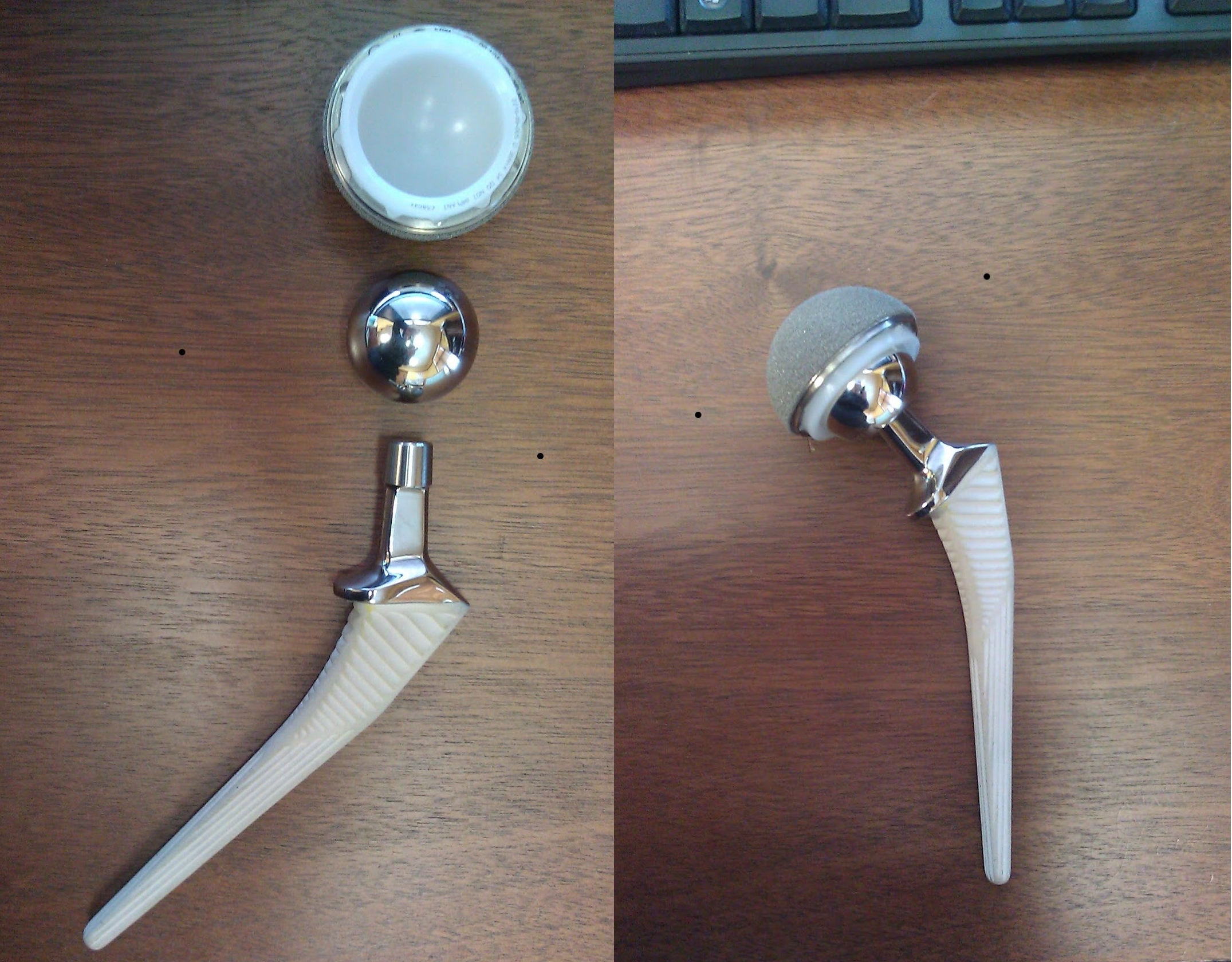
Modern implants are designed to mimic natural anatomy and often feature surfaces that encourage bone ingrowth. The system includes:
- Acetabular Shell: The metal cup implanted directly on the acetabular bony socket.
- Liner: A durable insert made of highly cross-linked polyethylene.
- Femoral Head: The metal or ceramic ball that fits into the liner.
- Femoral Stem: A metal post secured into the thigh bone (femur).
How Long Does a Hip Replacement Last?
Hip replacement is one of the most durable joint procedures available. Large registry studies consistently report implant survival rates of 95–98% at 10 years and approximately 90–95% at 15 years. Younger age and higher activity levels are associated with greater wear over time, but implant materials and designs have improved significantly in recent decades. Most patients can expect their hip replacement to last well over a decade, and many considerably longer. If revision is ever needed, it is typically planned and non-urgent.
Anterior vs. Posterior approach
The "approach" refers to the surgical path taken to reach the hip joint. While both methods result in excellent long-term outcomes, they offer different early recovery profiles. I perform both approaches, selecting the most appropriate one based on your unique anatomy and clinical needs.
| Anterior approach | Posterior approach | |
|---|---|---|
| Description | Muscle-Sparing: Muscles are split, not cut. | Traditional: Involves splitting the gluteus maximus and cutting the small rotator muscles. |
| Advantages | Often associated with a faster early recovery and fewer movement restrictions. | Provides excellent visibility for complex cases and has a long history of proven reliability. |
| Disadvantages | Numbness from proximity with lateral femoral cutaneous nerve skin branches. | Slightly higher dislocation risk compared to the anterior approach; minimized by following post-operative precautions. |
Recovery Timeline
- Day of surgery: Surgery is typically done with spinal anesthesia with sedation. Most patients are up and walking with assistance on the same day as surgery.
- Weeks 0–6 (Protection): Walking with a walker, or a cane, as needed. Avoid extremes of bending or twisting. Driving is not allowed for the first 6 weeks, though anterior approach patients may be cleared sooner. Typically I arrange for home care and home physical therapy for a few weeks after surgery.
- Weeks 6–12 (Early Function): Most patients are walking independently and returning to light daily activities. Therapy transitions to strengthening.
- Months 3–12 (Strengthening and maturation): Regaining of full strength, balance, and endurance. Most patients reach maximum improvement by the one-year mark.
Risks of surgery
- Infection: The most serious complication, occurring in approximately 1% of cases. Treatment often requires additional surgery.
- Dislocation: The prosthetic joint can dislocate, particularly in the early postoperative period. Risk is low and is minimized by following activity guidelines.
- Leg length discrepancy: Minor differences in leg length can occur; most are not clinically significant and resolve with rehabilitation.
- Blood clots (DVT/PE): Blood thinners and early mobilization are used routinely to reduce this risk.
- Component loosening: Wear over time may eventually require revision surgery.
- Nerve injury: Rare, but can affect sensation or movement around the hip or knee.
- Fracture: Risk of bone fracture during component insertion, particularly in patients with osteoporosis.